DDIdeas

The golden combination of a meaningful influencer partnership

What we learned from an illustrator who dedicates his time sending people ‘hate mail’?

Authenticity and influencers: two buzzwords if ever we’ve heard (slash used) them. Both rely on allowing people and brands to operate in a way that clearly defines who they are, with as little bias as possible. And yet in the media landscape, there’s more and more pressure to deliver collaborations that don’t necessarily prioritise those two boxes.

So how do you meaningfully combine the two without selling out?

Recently we were lucky enough to have an audience with British illustrator, artist and speaker Mr. Bingo as part of an AGDA event and it was enlightening to say the least. Talk about pushing the boat right out.

“My existence is simple, I’m here to entertain and amuse,” he said. But can it be that simple?

Frank, sharp and divisive, Mr. Bingo doesn’t mince words when it comes to what drives him and why his MO has currency in the modern media landscape. He does what he wants, when he wants, how he wants and inevitably comes out on top. He’s best known for his hate mail postcards – irreverent illustrated messages on postcards designed to offend and amuse – but it’s his attitude that makes him so interesting.
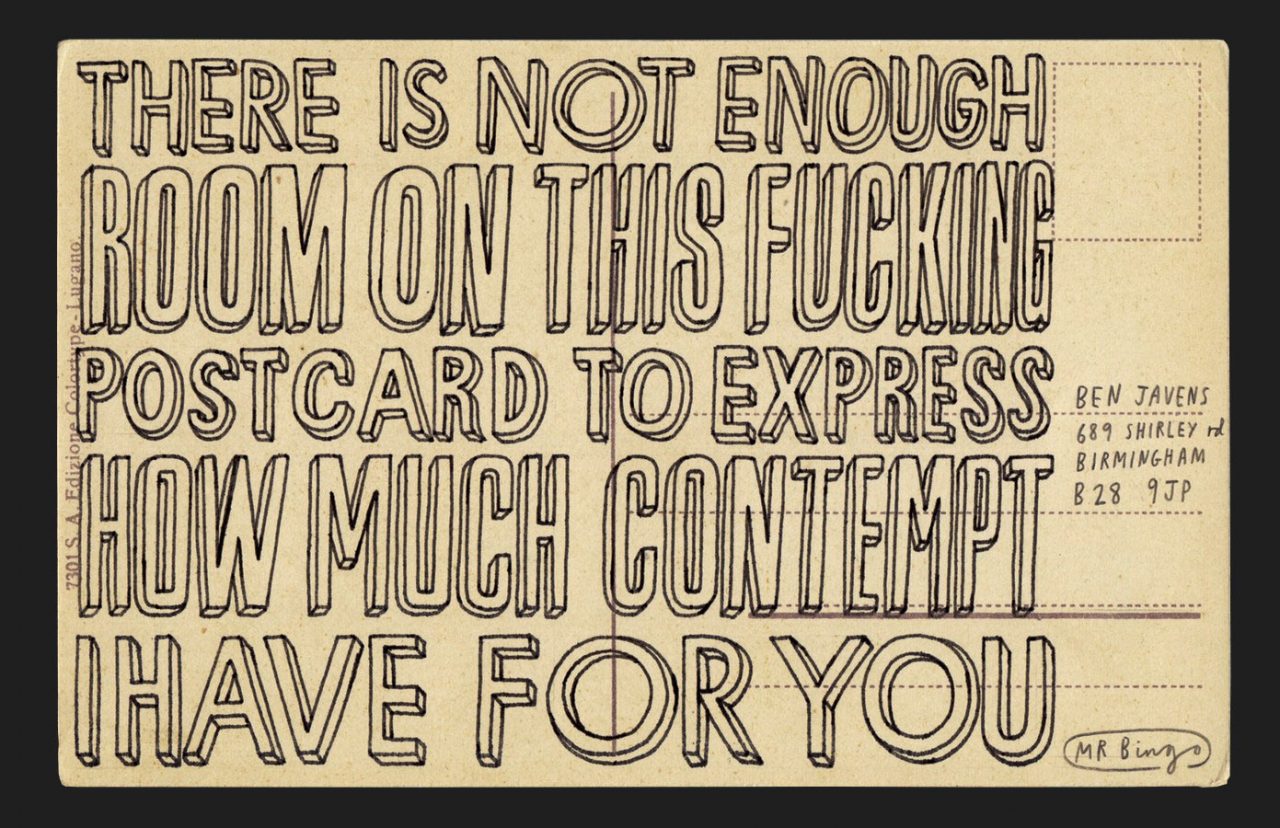
Past clients include Nike, BBC, Absolut and Microsoft, but when asked how he works with briefs, he’s proud of the fact that he, quite frankly, ignores them. Instead, he prefers to ideate the concept he feels represents his relationship with the brand or more importantly evokes a deep reaction and connection with the brand and sells it back to his ‘employers’.

“Taking the piss, having a laugh, being silly – that gets attention. That’s fun. That’s nothing but being human,” says Mr. Bingo. Which goes to prove the point that in a modern fragmented world, disruption is key. Mr. Bingo goes on to prove the point that being bold but true to your personal brand is exactly what ensures cut through. But that’s only possible when it’s authentic.

So I guess the point is, when looking at influencer networks and possible collaborations, perhaps it’s time to take our foot off the peddle when it comes to control. The golden combination could be truly finding a partnership that acknowledges what both parties contribute and letting it grow in a way that might not be exactly what you expected – or bargained for – but might have a little bit of that magic you simply cannot manufacture or pay for.

DDIdeas

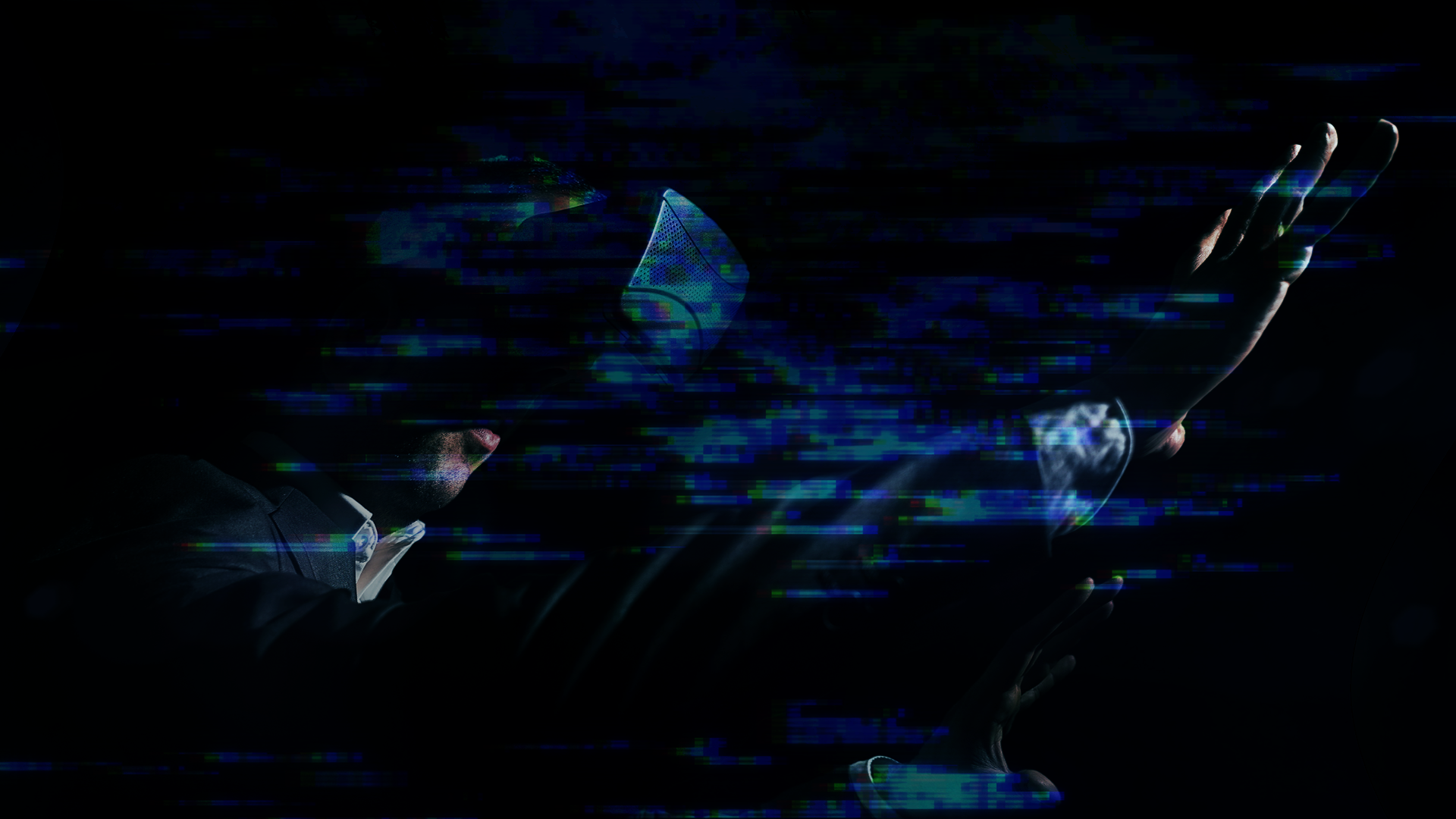
Glasses with the power to change the world

Who would have thought that a self-confessed technophobe would venture to Europe, to the Cannes International Festival of Creativity, and return home to Sydney an evangelist to all things ‘virtual reality’?

I’m a little embarrassed to say that I’d never put on a pair of Oculus Rift glasses until June this year. Which means I’d never experienced the power, the awe, the sheer mind-blowing amazingness of virtual reality. And I have to say that having done so has shifted my entire perspective around this so-called ‘new medium being invented in our lifetime’.

There’s no question that this new frontier blurs reality with fiction in a way where they become so entwined it’s almost impossible to distinguish between the two. The unreal becomes the real, even if just for the length of a short film. So as a closet psychologist, that poses some interesting questions around the impact of virtual reality on the human condition.

Because while it’s kind of wonderful to hit a button from the comfort of your favourite sofa that promises “Sunshine in the park”, and seconds later to find yourself hearing birds chirping above, bathed in summer light as you chill under a protective tree, is there a downside? A tipping point where the VR experience, minus the annoying mosquitos the layers of obligatory sunscreen, actually becomes a better, more desirable perhaps a complete replacement for the real thing?

As the mother of two young children who are already pretty addicted to anything audio-visual, I wonder if there’s a point at which I might completely lose my little pets to their virtual reality glasses. When does the unreal entirely surpass the real? Think of Sam Worthington in Avator going through the motions of chowing down his dinner purely to stave off starvation, in order to get back into his transformative ‘box’ and return to his much more intoxicating fantasy life.

Because let’s be honest, mosquitos are annoying, and so is having to slather your lily white body in white ghosting sunscreen. And yet driving past my local park this morning on my way to work, I happened to get caught at a traffic light. I watched the breeze gently caress the leaves of a hundred-year-old oak tree and I was transported. It was a glorious morning with blue skies, real birds singing real songs, the very definition of a beautiful summer’s day. And there was a part of me that jolted at the realisation that popping on a pair of virtual reality glasses could 100% recreate that scene in minute detail. But what do you lose not having that breeze blow through your hair, or the grass scratch you legs?

There’s a trend right now called “The Tactilians” which talks to how much we crave touch both physically and emotionally in a world filled with sleek, cool surfaces. Fact: We now touch our smartphones more than any other surface, which is changing the way we process emotions. Wearables and ‘touch infusion’ technology may negate this but how far can they really go?

Maybe it’s the Gen X’er in me showing up, but I worry that VR compromises something that hits at the very core of what defines us and makes us human: You lose being present.

So, in a world where Mindfullness is a full blown epidemic and modern day CEOs swear by the app ‘Headspace’, I’m facing a moral dilemma. On the one hand I am blown away by VR, a complete convert, and yet on the other I am cautiously resistant to what this new technology actually means for us.

Virtual reality is described by many as the great empathy inducer. The NYT with their brilliant series “The Displaced” have really understood this as have Charity Water: the glasses-wearer gets to walk many kilometres carrying a large bucket to the village well with an 8-year-old African girl to get water for her family every day. Seeing the state of the well, filled with all manner of horrors, feeling her fear, and her parched thirst simultaneously, it is impossible not to feel for her. Empathy is a natural end result, and there is great power that comes from that.

So in closing, as I contemplate a Virtual Reality brief on my desk for one of our clients, I’m beckoned by what awaits. Am I in? Oh yeah, absolutely, but always with a small part of me that’s kind of missing those mosquito bites and windswept hair.

Watch this space and we’ll keep you posted on how we go with our VR development journey here at DDI.

DDIdeas

The Indie Summit Highlights

The Indie Summit Highlights

I was lucky enough to recently attend The Indie Summit, the coming together in London of over 200 top independent agencies from around the globe. After a jam-packed couple of days rubbing shoulders with some of the marketing and communications industry’s finest, here follows a selection of my top picks.

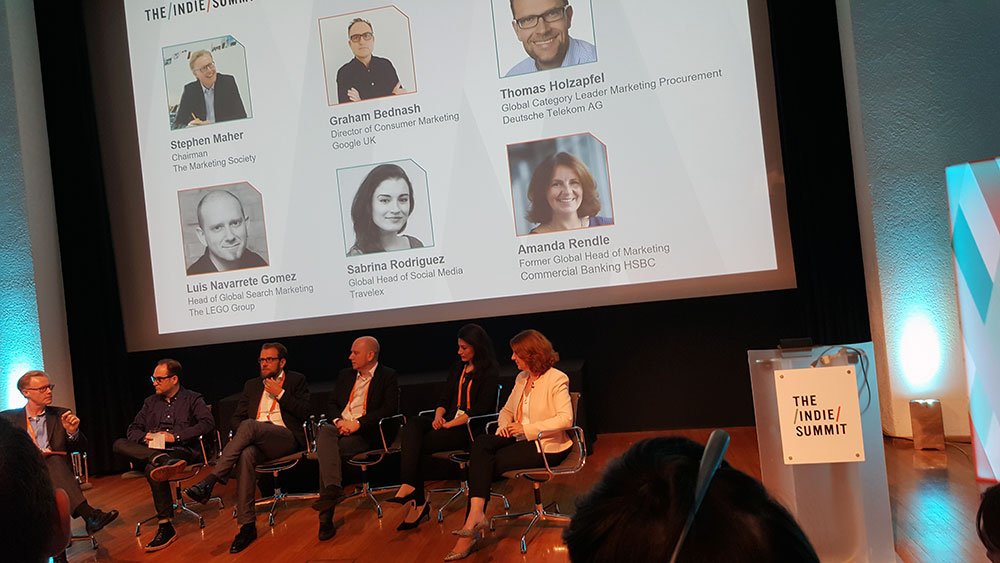
We were treated to a compelling panel discussion with the Who’s Who of global client brand leaders – from Google to LEGO. I found this riveting, with a few prize snippets coming from Graham Bednash, Consumer Marketing Director at Google who proffered up the gem that agencies thrive on Talent, Perseverance, Luck and ‘a healthy dose of Amnesia’. There was unanimous consensus that the main thing agencies bring is creativity, inspiration and freshness of perspective. “I spend days looking at horrible charts” said Amanda Rendle ex Global Head of Marketing, Commercial Banking for HSBC “and agencies bring a new perspective because they don’t have to suffer that.”

They all pushed for greater honesty and openness from their agencies – “Move beyond the inherent fear” encouraged Graham Bednash. Every one of them confirmed that they cannot abide Credentials presentations (“…45 minutes of hearing agencies talk about themselves is torture”) and yet there is an inherent disconnect surrounding not really understanding how agencies do what they do, which has a spill-over effect on remuneration. Says Thomas Holzapel, Global Category Leader Marketing for Deutsche Telekom ”Understanding how to evaluate what an idea is worth is hard”.

Perhaps as a light warning that our industry is ripe for disruption, Sabrina Rodrigues, Global Head of Social for Travellex tells us that Uber-style agencies are right on our doorstep, where you can dial for an immediate service.

Next up we heard from Phil Barden, the man behind the original Flash Mob that rocked the world at Liverpool Street station for T-Mobile. He talked candidly about the fact that its off-the-charts success found him questioning everything he’d ever thought he knew about marketing and how consumers engage with brands. Bear in mind that the flash mob featured no product message, no pricing, no features or benefits and was very light on branding, and yet its sales-driving effect broke every record for the category. He found himself desperate to un-package this to understand why, and it led him to an obsession with behavioural science.

In a nutshell his take is that humans seek to conserve energy by making as many ‘no-brainer’ decisions as we can through the day. These ‘demand less of us’. Barden believes (and there is science to back this up) that as marketers we spend far too much time worrying about consumer motivation and not enough time thinking about how we get in people’s brains in the first place.

Gary Noesner, former Chief Negotiator, FBI Crisis Negotiation Unit, took us through his remarkable story of life and death high stake negotiations with charisma and pathos. His advice to us regular folk in the heat of any negotiation is as follows:

• If you do nothing else, stall for time (everything comes easier when the emotion is notched down a few pegs)
• Take the time to listen – figure out what makes the person you are talking to tick
• Paraphrase – repeat back what you just heard them say to check for common understanding
• Acknowledge not just their story, but the feelings behind that story.

A quote from Gary that I for one can always pay greater head to is that “Listening is the cheapest concession you can make.”

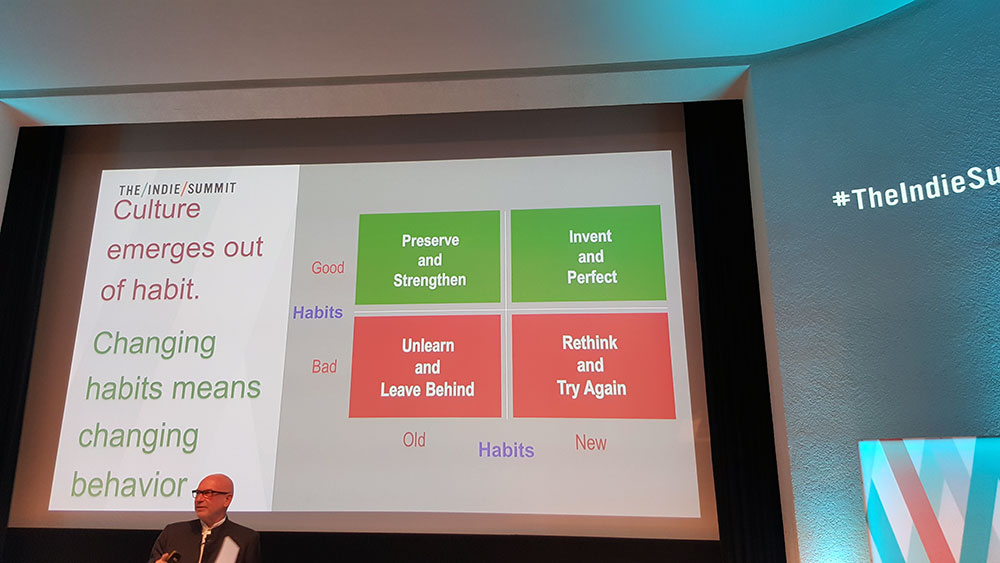
Karl Heinz-Oehler from Denison Consulting closed the first day with a great piece on Culture and encouraged all of us to step back and very honestly interrogate the culture of our organisations, to admit to ourselves that every culture is punctuated by ‘bad habits’ and that moving forward is about admitting to these in order to let go of them.

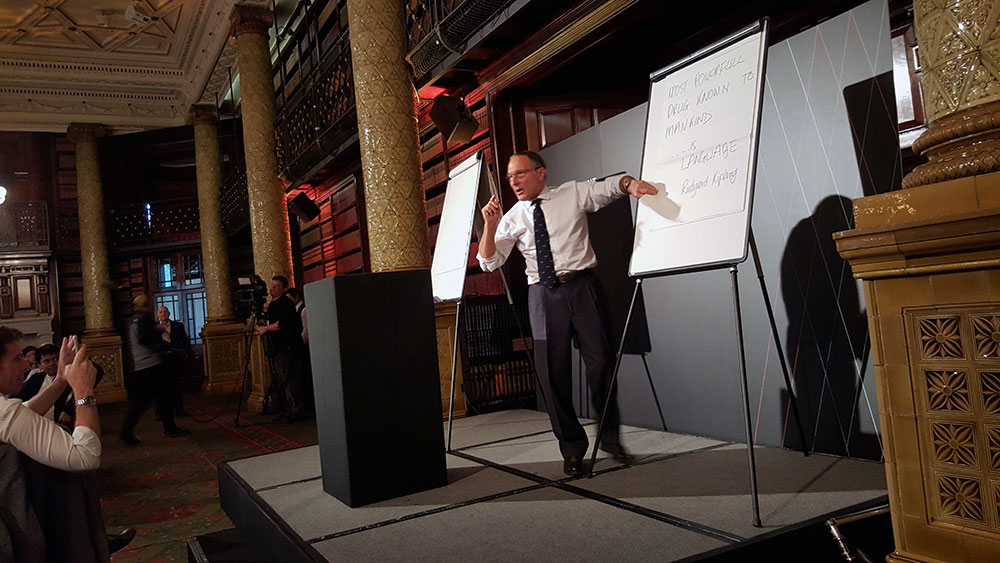
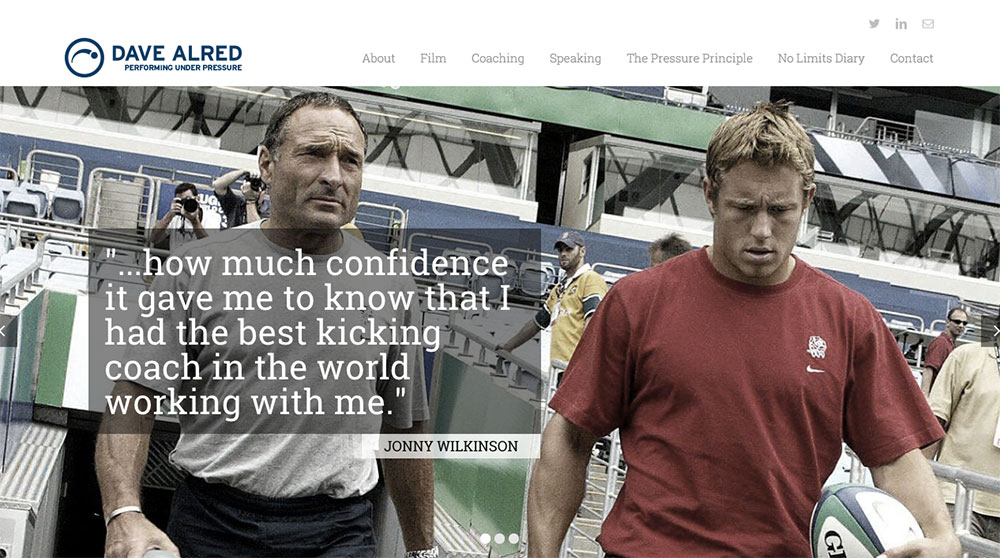
Dinner was held at a classic London venue, the glorious Gladstone Library and we had the honour of hearing from Dr Dave Alfred MBE, or put in more everyday terms, the man who coached Johnny Wilkinson to rugby greatness.

Another natural speaker, he took a spellbound room through his take on Rudyard Kipling’s quote: “The most powerful drug known to man is language”.

According to Sir Dave, the optimal age for positive self-talk is age 4 and it’s pretty much downhill from there. As adults, our natural tendency is to start by talking about all the things we’re “rubbish at” rather than focusing on what do well. Coaching, mentoring, training, however you choose to frame it, is all about reinforcing what people are good at, honing in on their natural strengths (we all have them) and then using productive language (not just “That was a good kick, but rather “That was a good kick because your foot was turned out at the right angle, your head was up, now let’s think about how we can make it even more effective…”)

His top tip is that we all immediately remove the words “Never”, “Always” and “Can’t” from our vocabulary and we will instantly be better. Get ride of those words and focus on this one – FIG (or “Fuck I’m good”).

For more from this amazing man, check out his website and book ‘The Pressure Principle’: http://www.davealred.com/

DDIdeas

Let’s protect our reputation as thieves

It’s a reputation we’ve spent 200 years trying to cast off. However, if the suggested IP legislation is passed, the world will rightfully see Australia as the bastion of charlatans, raping the creators and celebrating the frauds.

In 2015, the Fortune 500 CEOs listed their top want as ‘creativity’. Yet Australian lawmakers are set on a path to stamp it out.

The shortsightedness of the proposed changes spits in the face of the world trend to recognise, foster and protect design. For example, the UK have recently tightened their
IP laws. Copyright now lasts the artist’s lifetime, plus a further 70 years. What’s more, transgressors will be landed with crippling fines and long gaol terms.

If Australia was a factory to the world, like China, this move would make at least a modicum of sense: ‘Rip off the innovators, keep our factories running.’

But our factories are already non-existent. We have nothing to make – largely because we showroom our own designers’ ideas, then reward merchants like Adairs and Country Road with a purchase. We are fostering the proud Aussie passion for a cheap knock off.

If you believe, as I do, that design is the highest function of the human brain, those who dare to defy the odds and start their own consultancy should be celebrated. Under the proposed policy, they will be sentenced to fail before they even start.

It’s no wonder some of our brightest talent now works overseas. When was the last time you saw Marc Newson? Why does Adam Godrum now design for Alessi in Italy? Your totally reckless approach to IP will see this brain drain not merely continue, but snowball.

It will take great policy makers to get a perspective on this crime, but it is possible.

The music industry got it right. Artist, writers and performers live, thrive and survive on their royalties. By contrast, the design industry delivers 1000s of graduates each year to work as barristas, wait staff or to Centrelink. Exacerbating the problem, the demise of the local car industry strangled all but a handful of design jobs in Australia.

Please re-think this criminal legislation before it’s too late. Remember, everything is designed. The only way for us to compete on a world scene is to design better.

Come on Australia, change from a knock-off nation and embrace the real Aussie spirit of:
Fair Go.


BERND WINTER

Founder

PS – Our logo is registered, trademarked and copyrighted in Australia. So please feel free to rip it off.

DDIdeas

Accidentally Fabulous On The Green

Every woman understands the irrepressible urge to splurge on a fashion find in the spirit of the moment.

Greensborough Plaza’s AW16 campaign seeks to tap into that insight by heroing ‘accidental finds’ – gorgeous pieces you simply can’t walk past en route to doing the weekly shop. The upside – heavy on fashionista creds, light on the wallet.

Teaming up with renowned fashion photographer Jez Smith, DDI created a 36 page online mini magazine, a first for Greensborough Plaza, supported by a social media program encouraging people to explore the magazine which was published via ISSUU.

So go ahead and check it out, and pop into Greensborough Plaza. Oh, and don’t be surprised if a trip to the grocery store turns into a whole new outfit.